
Dental Health
Is It OK to Leave a Broken Tooth?
By Dr. Joseph "Yossi" Schwimmer, DDS · October 19, 2026 · 9 min read
Can you leave a broken tooth untreated? Learn the risks of waiting, when a crack needs urgent care, and how Alpine Dental in Lakewood and Jackson, NJ, can help.
Introduction
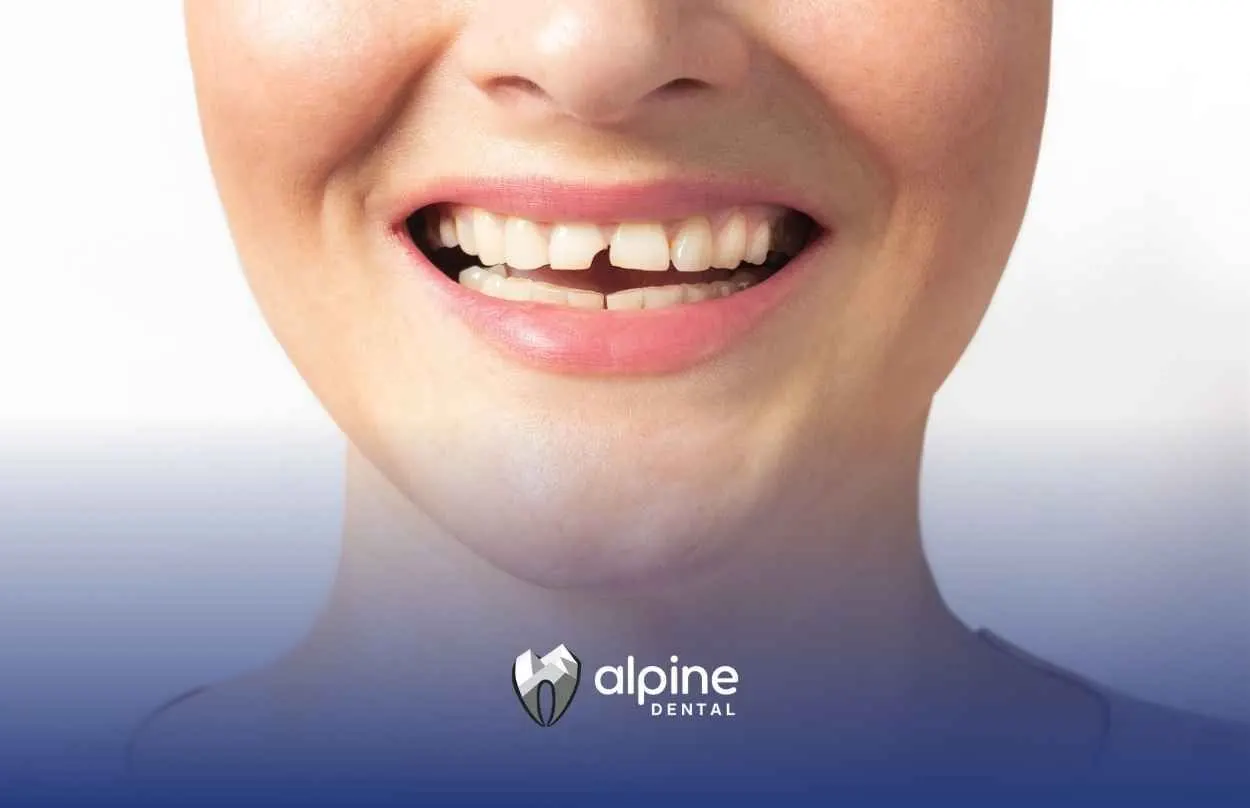
No, a broken tooth should not be left alone, and the reason is more specific than general caution. A break gives bacteria a route into the tooth, and the damage does not repair itself. The clearest figure comes from research the American Association of Endodontists cites on cracked teeth: in one study, teeth left without a protective crown had a 2-year survival rate of 20%, against 94% for those that were crowned.
How urgently you need to be seen does depend on the break. A small chip in the enamel and a fracture that has reached the nerve are different problems with different timelines, which is worth sorting out with a dentist rather than guessing at home.
What Happens If You Leave a Broken Tooth?
Bacteria Get In and Stay In
This is the mechanism behind most of what follows. The AAE's clinical discussion of cracked teeth notes that bacteria are ubiquitous in cracks, which "could result in a continual source of contamination," and that deeper cracks "can serve as an area of continued bacterial ingress."
That matters because of where the crack leads. The AAE explains that when the pulp inside the tooth dies and goes untreated, infection develops in or around the root. The American Dental Association names a cracked tooth as one of the three causes of an abscess, and warns that an untreated abscess "can lead to a serious infection in the jaw bone, teeth and surrounding tissues." Our guide to the stages of a tooth abscess covers that progression.
The Break Gets Worse Under Normal Use
A broken tooth is weaker than an intact one, and it keeps being chewed with. The AAE notes that deeper cracks "potentially weaken the tooth and root," and is direct about the cost of waiting: "Delaying the coronal restoration poses significant risk of crack propagation, split tooth, and failure."
That is where the survival figures come in. The AAE cites one study in which cracked teeth without a crown had a 2-year survival rate of only 20%, compared with 94% for those that received one. Among teeth that were crowned, another study found the crack kept spreading in just 4%.
Pain and Sensitivity, If the Nerve Is Exposed
The AAE describes the typical pattern as "erratic pain when you chew your food," along with sudden pain from very hot or cold temperatures, and notes that the pain may come and go. The ADA separately lists fractured teeth and worn fillings among the causes of sensitivity, and explains that exposed root surfaces are more sensitive to touch and temperature than enamel is.
It Will Not Heal on Its Own
Worth stating plainly, because this is the assumption behind leaving it. The AAE puts it this way: "Unlike a broken bone, the fracture in a cracked tooth will not heal." Teeth have no mechanism for closing a fracture, so waiting does not improve the situation.
"But It Doesn't Hurt"
This is the most common reason people wait, and it is the least reliable one. The AAE notes that an abscessed tooth "may or may not be painful," so the absence of pain tells you very little about what is happening inside the tooth.
There is also a specific trap. If a break hurt for a while and then went quiet, that can mean the pulp has been damaged past the point of healing, which is how the AAE describes the progression: "Eventually, the pulp will become damaged to the point that it can no longer heal itself." A dead nerve stops sending pain signals while the infection risk remains.
To be fair in the other direction, not every painless break is urgent. The AAE describes craze lines, which are tiny cracks in the outer enamel, as "very shallow, cause no pain, and are of no concern beyond appearances." A fractured cusp rarely damages the pulp either. Our article on why a cracked tooth may not hurt works through which is which.
The practical point is that these possibilities look similar from the outside and need an exam to tell apart. That is an argument for getting it checked, not for assuming the worst.
When Should I See a Dentist About a Broken Tooth?
As soon as you can. The AAE advises being seen as soon as possible when you have these symptoms or suspect a cracked tooth, because early diagnosis is essential to saving the tooth, and its point about delay carrying significant risk applies here too.
For a tooth that has just broken, the ADA's first-aid guidance is to rinse your mouth with warm water, apply cold compresses to your face to keep swelling down, and see a dentist as soon as possible. Keep any piece that came off and bring it with you.
Call promptly rather than waiting for a routine visit if you notice:
- A sharp edge cutting your tongue or cheek
- Pain when biting or chewing, or sensitivity to hot, cold, or sweet
- Swelling, gum redness, a bad taste, or a fever, which the ADA lists among the signs of an abscessed tooth
- Pain that was present and has now stopped
- The break looking larger than it did
When to Go to an Emergency Room or Call 911
Some situations should not wait for a dental appointment:
- Difficulty breathing, swallowing, or speaking
- Swelling spreading across your face, jaw, or neck
- Swelling around the eye, or sudden vision changes
- A fever alongside facial swelling
- A significant facial injury, or a tooth knocked out entirely
- Bleeding that does not stop with gentle pressure
The ADA's clinical guidance on dental pain and swelling sets the threshold for urgent care: patients "should be referred for urgent evaluation if their condition worsens, they develop a deep space infection, or sepsis is suspected." The ADA also advises going to a local emergency room if your dental office is closed during an emergency.
How Is a Broken Tooth Treated?
It depends on how deep the break goes and how much sound tooth is left. Your dentist will examine it, usually with an X-ray, before deciding. The AAE's treatment approach by type:
- Craze lines need no treatment, since they affect only the outer enamel
- A fractured cusp, where a piece of the chewing surface breaks away, is usually restored with a filling or a crown. Alpine's broken and chipped tooth repair page covers this kind of work
- A crack that has reached the pulp is treated with root canal treatment and a crown. If it extends below the gum line, the AAE says the tooth cannot be saved
- A split tooth cannot be saved intact, though the AAE notes endodontic treatment may save part of it
- A vertical root fracture may mean removal, or surgery if taking out the fractured portion can save the tooth
The crown is doing more work than it appears to. Those survival figures, 20% without one against 94% with one over two years, are why a dentist will often want to cover a cracked tooth rather than simply fill it.
Two honest caveats. The AAE says some cracks continue to progress despite treatment and that a crown "does not guarantee success in all cases." It also notes that in its own prospective study of deeper cracks, success ran around 90% with 96% survival over two to four years, and that extraction should be considered "an inferior alternative to saving cracked teeth." In other words, treatment usually works well and is usually worth attempting, without being certain.
How Alpine Dental Helps
Alpine Dental provides broken and chipped tooth repair and root canal treatment at our Lakewood and Jackson, NJ offices. Call and tell us when the tooth broke, whether anything sets off pain, and whether you have any swelling, and the team can advise how soon you should come in. Bring any piece that broke off.
So, is it OK to leave a broken tooth? No, because the break does not heal, bacteria keep getting in, and normal chewing tends to make it worse. How quickly you need to be seen depends on the break, which is something an exam settles rather than guesswork.
Call us at (732) 934-1888 or book an appointment online to have the tooth looked at.
Frequently Asked Questions
How long can you leave a broken tooth untreated?
There is no safe window to quote, and the approved guidance does not give one. What the AAE does say is that delaying the restoration carries significant risk of the crack spreading, the tooth splitting, and failure, and that early diagnosis is essential to saving the tooth. The practical answer is to be seen as soon as you can.
Will a broken tooth heal on its own?
No. The AAE is explicit: "Unlike a broken bone, the fracture in a cracked tooth will not heal." Treatment protects the tooth and the pulp rather than mending the break.
Is a broken tooth an emergency?
Sometimes. A freshly broken tooth should be seen as soon as possible, and the ADA advises going to an emergency room if your dental office is closed during an emergency. Treat it as urgent if you have spreading swelling, trouble breathing or swallowing, a fever with facial swelling, bleeding that will not stop, or a significant facial injury.
Can a broken tooth get infected even if it doesn't hurt?
Yes. The AAE notes an abscessed tooth may or may not be painful, and describes how an untreated dying pulp leads to infection in or around the root. Pain is not a reliable gauge of what is happening inside the tooth.
Does every broken tooth need a crown?
No. Craze lines in the enamel need nothing, and a fractured cusp is often restored with a filling. A crown becomes important once the crack is deeper, which is where the survival difference the AAE cites comes from: 20% at two years without one, against 94% with one.
Can a broken tooth always be saved?
Not always, which is part of the reason not to wait. The AAE says a crack extending below the gum line means the tooth cannot be saved, and that a split tooth cannot be saved intact. Earlier treatment keeps more options open.
SOURCES:
- https://www.aae.org/specialty/cracked-teeth-to-treat-or-not-to-treat/
- https://www.aae.org/specialty/cracked-teeth-to-treat-or-not-to-treat/
- https://www.aae.org/patients/dental-symptoms/abscessed-teeth/
- https://www.mouthhealthy.org/all-topics-a-z/abscess
- https://www.mouthhealthy.org/top-dental-symptoms