
Dental Health
What Is Plaque? Understanding Its Causes, Effects, and Prevention
By Dr. Joseph "Yossi" Schwimmer, DDS · September 7, 2026 · 12 min read
Learn what plaque is, why it forms, and how it affects your teeth and gums, plus expert prevention tips from Alpine Dental in Lakewood and Jackson, NJ.
Introduction
Plaque is one of the most common words heard at a dental checkup, but few patients know exactly what it is or why it forms every single day, no matter how carefully they brush. Dental plaque is a living film of bacteria that builds up on teeth continuously, and understanding how it works is the first step toward keeping it under control.
Whether you are managing a child's first cavities, caring for an aging parent's smile, wearing braces, or simply want to understand why your teeth feel "fuzzy" by the end of the day, this guide breaks down what plaque is made of, what causes it, how it differs from tartar, and the most effective ways to prevent it from damaging your oral health.
What Is Plaque on Your Teeth?
Plaque is a soft, sticky film that forms on the surfaces of your teeth, along the gumline, and between teeth every day. It is made up of bacteria, the byproducts they release, leftover food particles, and saliva. On its own, plaque is colorless or pale yellow, which is why it is easy to miss in the mirror. Most people only notice it as a fuzzy or rough texture when they run their tongue across their teeth.
Dental researchers classify plaque as a biofilm rather than a simple layer of grime. A biofilm is an organized community of microorganisms that attach to a surface and build a protective matrix around themselves, which is part of why plaque is so difficult to rinse away with water or mouthwash alone. Dozens to hundreds of different bacterial species can live within a single patch of plaque, and while some of these microbes are harmless, others produce the acids that damage enamel and irritate gum tissue.
If plaque is not removed through consistent brushing and flossing, it begins to harden within a day or two, forming tartar (also called dental calculus), which can no longer be removed with a toothbrush.
What Causes Plaque to Form?
Plaque is not caused by poor hygiene alone. It is the natural result of bacteria that live in every mouth interacting with food, sugar, and saliva. Understanding the process makes it easier to see why daily habits matter so much.
How Plaque Develops, Step by Step
- Bacteria feed on sugars and starches. Every time you eat or drink something containing sugar or refined carbohydrates, bacteria in your mouth begin breaking it down.
- Acid is released as a byproduct. As bacteria metabolize these sugars, they produce acids that lower the pH on the tooth surface.
- Acid attacks the enamel. These acids soften and demineralize enamel, the first stage of tooth decay.
- A sticky film forms. Bacteria, food debris, acid byproducts, and saliva combine into the soft film known as plaque.
This cycle can begin within minutes of eating and continues to build throughout the day, which is why dentists recommend brushing at least twice daily rather than relying on a single morning routine.
Common Risk Factors That Speed Up Plaque Buildup
Some patients naturally accumulate plaque faster than others. Common contributing factors include:
- Inconsistent brushing or flossing
- A diet high in sugar, refined carbohydrates, or frequent snacking
- Dry mouth, whether from dehydration, mouth breathing, or certain health conditions
- Tobacco use, which also makes plaque more difficult to remove and can stain teeth
- Chronic conditions such as diabetes, which can affect the body's ability to fight bacteria
- Crowded, overlapping, or misaligned teeth that are harder to clean thoroughly
- Braces, retainers, or other dental appliances that create extra surfaces for plaque to hide on
Plaque vs. Tartar: What's the Difference?
Plaque and tartar are closely related, but they are not the same thing, and the distinction matters for how each one is treated.
How Tartar Forms From Plaque
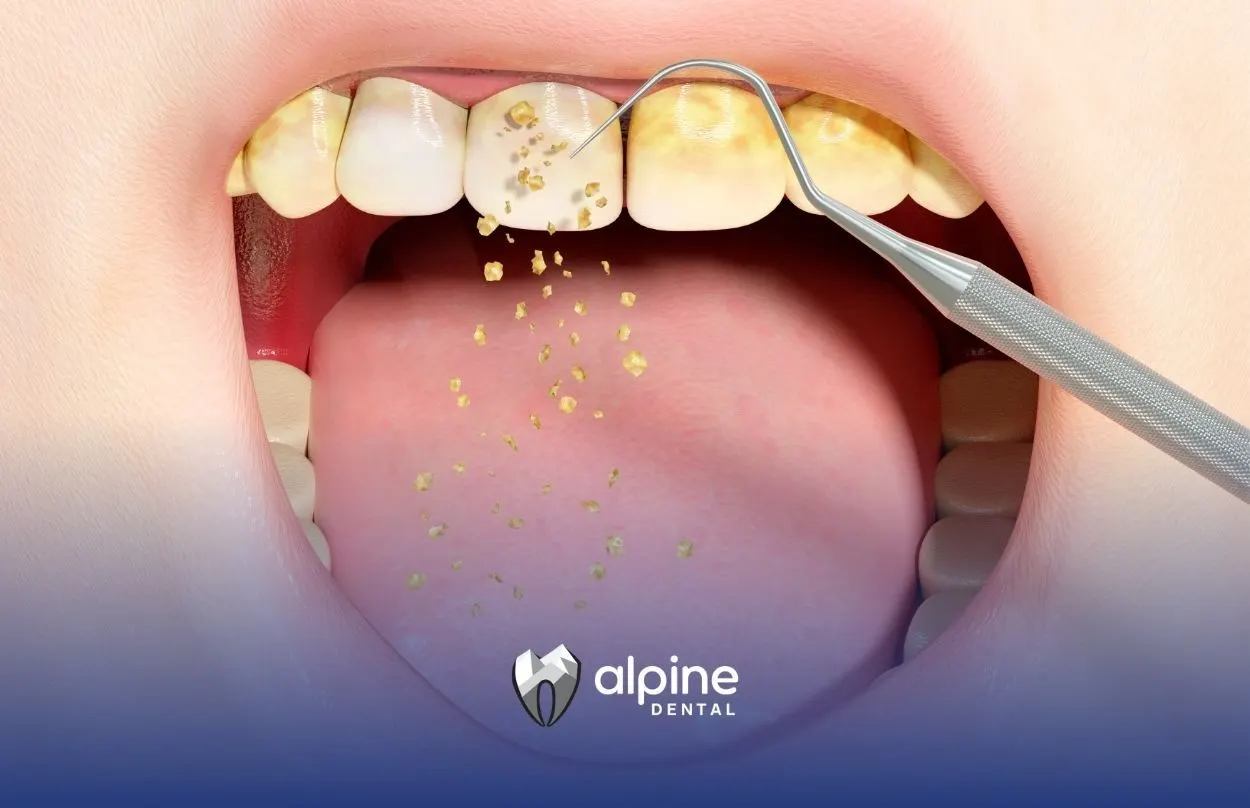
When plaque is left on the teeth for roughly 24 to 72 hours, minerals in saliva begin to combine with it and harden it into tartar. Unlike plaque, tartar is rough, porous, and often visible as a yellow, brown, or grayish deposit near the gumline. Its rough surface makes it easier for new plaque to cling to, which can accelerate gum irritation if it is not addressed.
Why Only a Dental Professional Can Remove Tartar
Plaque can be managed at home with a toothbrush and floss, but tartar cannot. Once it hardens, tartar bonds tightly to the tooth surface and requires professional tools, such as hand scalers or ultrasonic instruments, to remove safely. Trying to scrape tartar off at home with sharp objects can damage enamel or cut the gums, so a professional cleaning is always the safer route. This is one of the main reasons dentists recommend a cleaning appointment roughly every six months, even for patients who feel diligent about their home routine.
Why Plaque Is Dangerous If Left Untreated
Plaque is not just a cosmetic nuisance. Left unmanaged, it is the underlying cause of the most common dental problems patients face.
Cavities and Tooth Decay
The acids produced by plaque bacteria are the primary cause of cavities. Over time, these acids wear through enamel and reach the softer dentin underneath, creating a hole that will not heal on its own. Small cavities can often be treated with a simple filling, but decay that reaches the inner pulp of the tooth may require root canal treatment to save the tooth.
Gingivitis and Periodontitis
Plaque that collects along the gumline irritates gum tissue and is the leading cause of gingivitis, the earliest stage of gum disease, marked by redness, swelling, and bleeding when brushing or flossing. If gingivitis is not treated, it can progress to periodontitis, a more advanced form of gum disease in which the gums pull away from the teeth and the supporting bone can be lost. In our hygiene visits, we routinely see patients whose bleeding gums improve dramatically within just a few weeks of more consistent plaque removal, which is a good reminder that gum disease is often reversible in its early stages.
Bad Breath and Whole-Body Health Connections
Bacteria within plaque release sulfur compounds as they break down food particles, which is a major contributor to persistent bad breath, or halitosis. Research has also connected the bacteria in dental plaque, particularly below the gumline, to broader health concerns, including links between gum disease and conditions such as diabetes and cardiovascular disease. Chronic decay or advanced gum disease can also weaken teeth to the point of chipping or fracturing, which is why patients with heavily worn or brittle teeth often benefit from broken and chipped tooth repair alongside a renewed hygiene routine.
Plaque Concerns Across Every Life Stage and Need
Plaque affects every patient differently depending on age, health history, and daily habits. A one-size-fits-all approach rarely works, which is why we tailor our recommendations to the person in the chair.
Plaque and Cavities in Children
Children are especially vulnerable to plaque-related cavities because primary teeth have thinner enamel and kids often need help brushing effectively until around age seven or eight. Frequent snacking, juice, and sticky or sugary treats give plaque bacteria a steady supply of fuel throughout the day. We often remind parents that supervising brushing, limiting bedtime bottles or sippy cups filled with anything besides water, and scheduling routine checkups are some of the most effective ways to catch plaque-related decay early, before it requires more extensive treatment.
Plaque Risks for Seniors and Patients with Chronic Conditions
Older adults frequently take multiple medications that reduce saliva production, and since saliva naturally helps wash away food particles and neutralize acid, dry mouth can allow plaque to build up faster than it used to. Receding gums, which are more common with age, also expose root surfaces that are softer and more vulnerable to decay than enamel. Patients managing diabetes or other chronic conditions may also notice that their gums are more sensitive to plaque irritation, which makes consistent professional cleanings especially important for this group.
Plaque and Patients with Braces, Dentures, or Dry Mouth
Orthodontic brackets, wires, retainers, and dentures all create extra nooks where plaque can hide from a standard toothbrush. Patients wearing braces are often surprised at how quickly plaque accumulates around brackets if flossing is skipped for even a few days. For patients dealing with chronic dry mouth from medication or a medical condition, we typically recommend more frequent sipping of water, sugar-free gum to stimulate saliva, and shorter intervals between professional cleanings to keep plaque from gaining a foothold.
How to Prevent and Remove Plaque Buildup
The good news is that plaque is highly preventable with a consistent, fairly simple routine.
Daily Habits That Actually Work
- Brush twice a day for two full minutes using a fluoride toothpaste and a soft-bristled brush, paying extra attention to the gumline.
- Floss once a day to remove plaque from between teeth, where a toothbrush cannot reach.
- Use an antibacterial or fluoride mouthwash to help reduce the bacteria that contribute to plaque.
- Chew sugar-free gum after meals when brushing is not possible, since it stimulates saliva flow that naturally helps rinse away food particles.
- Replace your toothbrush every three to four months, since worn bristles clean less effectively.
Foods and Habits That Feed Plaque
Sugary snacks, sodas, sticky candies, and refined carbohydrates like white bread and chips give plaque bacteria the fuel they need to produce acid. Frequent snacking throughout the day is often more damaging than eating the same amount of sugar in one sitting, since it keeps the mouth in an acidic state for longer stretches. Tobacco use, whether smoked or chewed, also makes plaque more difficult to remove and increases the risk of gum disease.
When It's Time to See a Dental Professional
Even an excellent home routine cannot remove tartar once it has hardened, and it cannot catch decay hiding beneath the gumline or between teeth. A routine cleaning and exam every six months allows your dental team to remove buildup you cannot reach at home and to catch small problems, like a weakened or chipped tooth, before they turn into something more urgent. If you are ever dealing with sudden pain, swelling, or a knocked-out or broken tooth, that falls under dental emergency care rather than a routine visit.
How Our Team Helps Patients Manage Plaque and Protect Their Smiles
We look at plaque control as a partnership between what happens at home and what happens in our chair. During routine visits, our hygienists use ultrasonic scalers and hand instruments to remove plaque and tartar from areas a toothbrush simply cannot reach, including below the gumline. We also walk every patient through a personalized hygiene plan, since a busy parent, a senior managing dry mouth, and a teenager in braces all need slightly different advice.
For patients who have already experienced plaque-related damage, such as decay that has progressed to the point of needing a root canal, a chipped tooth from weakened enamel, or long-term staining from tartar buildup that brushing cannot fix, we offer solutions ranging from porcelain veneers to restore appearance to dental implants for patients who have lost a tooth to advanced gum disease. Many of these procedures can be handled efficiently thanks to our same-day dentistry options, which means less time away from work or school and fewer separate appointments.
Conclusion
Plaque forms in every mouth every day, but it does not have to lead to cavities, gum disease, or bad breath. Understanding how plaque develops, why it eventually hardens into tartar, and which habits put you or your family members at higher risk gives you the tools to stay ahead of it. Combining a consistent brushing and flossing routine at home with regular professional cleanings remains the most effective way to keep plaque, and the problems it causes, under control at every age.
If it has been more than six months since your last cleaning, or if you have noticed bleeding gums, tooth sensitivity, or visible buildup near your gumline, our team is here to help. Alpine Dental proudly serves patients throughout Lakewood, Jackson, and the surrounding Ocean County, NJ community with thorough cleanings and personalized prevention plans.
Contact us today at (732) 934-1888 or book an appointment online to get your smile back on track.
Frequently Asked Questions
How do you remove plaque from teeth?
Plaque can be removed at home through twice-daily brushing with fluoride toothpaste and daily flossing, which disrupts the bacterial film before it hardens. Once plaque has calcified into tartar, only a dental professional using specialized tools can remove it safely during a cleaning.
What's the difference between plaque and tartar?
Plaque is a soft, colorless film that forms daily and can be removed with a toothbrush and floss. Tartar is hardened plaque that has bonded to the tooth surface, usually appears yellow or brown, and can only be removed with professional dental instruments.
What does plaque look like on your teeth?
Fresh plaque is usually colorless or pale yellow, which makes it hard to see, though it often feels fuzzy or rough when you run your tongue over your teeth. If plaque hardens into tartar, it becomes more visible as a yellow, brown, or grayish deposit, especially along the gumline.
SOURCES:
- https://www.nidcr.nih.gov/health-info/tooth-decay
- https://my.clevelandclinic.org/health/diseases/10953-plaque
- https://www.mayoclinic.org/diseases-conditions/bad-breath/symptoms-causes/syc-20350922
- https://www.nia.nih.gov/health/teeth-and-mouth/taking-care-your-teeth-and-mouth
- https://www.cdc.gov/oral-health/
- https://pmc.ncbi.nlm.nih.gov/articles/PMC2147593/
- https://my.clevelandclinic.org/health/diseases/11263-oral-health-problems-and-diabetes